Compare 250g Gold Bar Prices
Compare live 250g gold bar prices from trusted UK dealers. 250g sits between the retail-standard 100g and the institutional 500g and 1kg formats — a useful size for serious individual investors and modest institutional holdings.
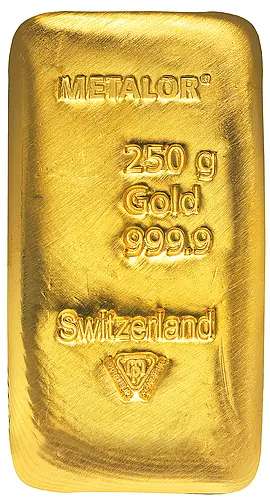
250g as an upper-retail format
250g gold bars represent a step beyond the typical retail investor commitment but remain within reach for individuals deploying meaningful capital into gold. At typical spot prices, a 250g gold bar runs into low six figures — comfortably above retail credit-card territory but below the wholesale weights where institutional buyers operate. UK retail demand at 250g is moderate but consistent.
Producers at 250g
The major investment-grade refiners all produce 250g gold bars: PAMP Suisse, Heraeus, Argor-Heraeus, Metalor, Perth Mint and Rand Refinery among others. Format is mixed at this weight — minted bars dominate retail availability while cast bars from specific refiners (notably Perth Mint and some Swiss producers) appear at competitive premiums for buyers prioritising metal-per-pound efficiency.
Premium structure
250g gold bar premiums in the UK typically run 1.5-3% over spot — slightly tighter than 100g (2-4%) but not as tight as 500g or 1kg formats. The premium reduction reflects continued amortisation of fixed production cost across more metal. For investors with capital to deploy at this scale, the premium savings versus repeated 100g purchases are meaningful over a multi-bar holding.
UK tax
250g gold bars are VAT-exempt as investment gold under HMRC rules. They are not legal tender and do not qualify for UK CGT exemption — gains above the annual allowance are taxable for UK residents on disposal. Bars at this weight typically appeal to investors prioritising bulk metal deployment over tax structure; CGT-conscious buyers usually combine 1oz coins with smaller bars to manage exposure.
Browse related
See all 250g bullion, 100g gold, or 500g gold.