Compare Royal Mint Gold Sovereign Prices
Compare live Royal Mint gold Sovereign prices from trusted UK dealers. Every modern gold Sovereign is exclusively Royal Mint output, struck at Llantrisant under Royal Charter.
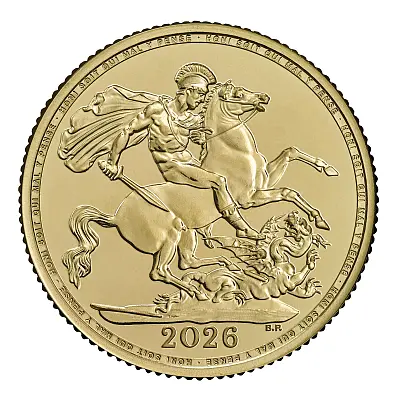
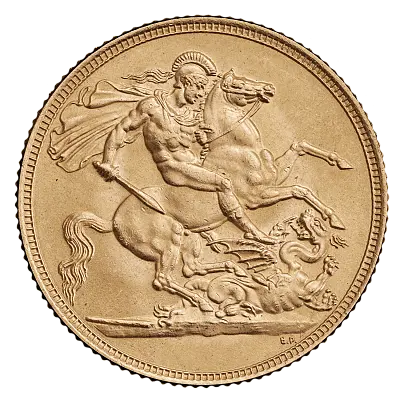
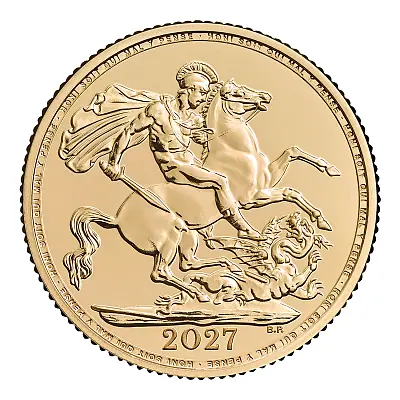
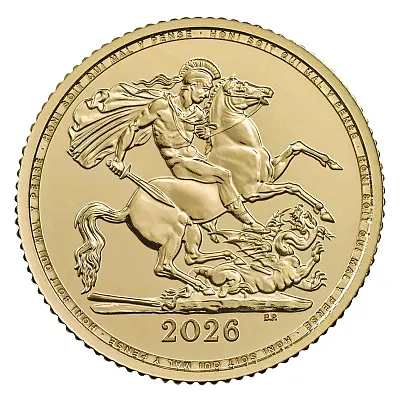
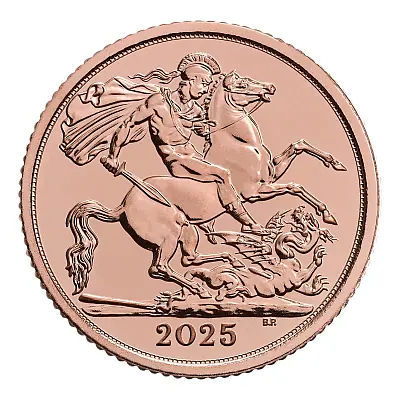
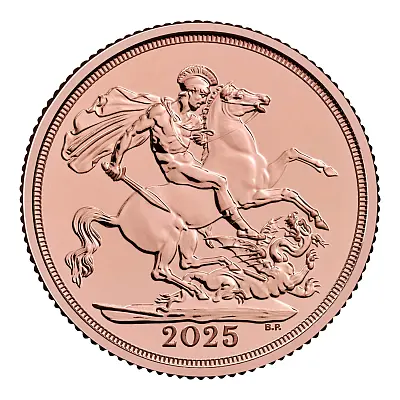
The Royal Mint's coinage monopoly
The Royal Mint operates under Royal Charter as the UK's exclusive coinage authority, wholly owned by HM Treasury. This gives every Sovereign two distinct layers of authority: Crown authorisation as legal tender, and Royal Mint production as the sole authorised manufacturer. The combination is structurally stronger than the typical refiner-bullion relationship, where producers operate under industry accreditation (LBMA Good Delivery) rather than sovereign authority.
Sovereign production at Llantrisant
Modern Sovereigns are struck at the Royal Mint's Llantrisant facility in South Wales on dedicated Sovereign-series equipment. The 22-carat alloy (91.67% gold, 8.33% copper) is mixed in-house and rolled to 1.52mm thickness before striking through hardened collar dies. Weight tolerance is ±0.04g per coin — tighter than most LBMA Good Delivery bar specifications. The Pistrucci St George reverse is reproduced from continuously maintained master dies dating back to the original 1817 design.
Branch-mint history
Between roughly 1855 and 1932, the Royal Mint authorised Sovereign production at branch facilities in Sydney, Melbourne, Perth, Bombay, Ottawa and Pretoria. Branch-mint Sovereigns carry small mint marks (S, M, P, I, C, SA) on the reverse and remain UK legal tender for tax purposes today — they were Royal Mint output produced at distant locations rather than separate national products.
Tax position
All Royal Mint gold Sovereigns — current production and historical — are VAT-exempt as investment gold under HMRC's specific Sovereign provision, and CGT-exempt as UK legal tender. Treatment is consistent across Full, Half, Quarter and Quintuple weights and across all years of issue.
Browse related
See all Royal Mint products, Royal Mint Full Sovereigns, or all Sovereigns.